Global FDI rebounds, but developing economies miss out – Unctad


Global foreign direct investment (FDI) rose 14% in 2025 to $1.6-trillion, rebounding after two weak years, although most of the increase came from financial flows through global hubs and not new productive investment, says international trade organisation UN Trade and Development (Unctad).
More than $140-billion of the increase came from higher flows through global financial centres. Excluding these conduit flows, global FDI rose by about 5%, thereby highlighting how limited the recovery remains in underlying investment.
Investor sentiment indicators also remained weak throughout the year. The value of international mergers and acquisitions fell by 10%, while international project finance declined for a fourth consecutive year, dropping 16% in value and 12% in deal numbers to levels last seen in 2019.
Greenfield project announcements fell sharply by 16% despite high total values that were driven by a small number of megaprojects.
The overall picture points to a rebound driven more by financial transactions than by broad-based investment expansion, Unctad says.
Further, FDI to developed economies surged, while flows to developing countries declined.
FDI flows to developed economies jumped by 43% to $728- billion, driven by Europe and financial hubs. The EU recorded a 56% increase, supported by large cross-border acquisitions and a rebound in economies including France, Germany and Italy.
By contrast, flows to developing economies declined by 2% to $877-billion, and accounted for 55% of global FDI. Lower-income countries were hit hardest, with three-quarters of least- developed countries experiencing stagnant or declining inflows.
Additionally, international infrastructure investment fell by 10% in 2025, largely owing to a sharp pullback in renewable- energy projects, as investors reassessed revenue risks and regulatory uncertainty.
Domestic investors increasingly filled part of this gap. However, this presents the risk that this shift could widen investment shortfalls in countries that rely on international finance for large-scale infrastructure and development-related projects, Unctad notes.
Meanwhile, investment is becoming increasingly concentrated in a handful of strategic, capital-intensive sectors. Data centres accounted for more than one-fifth of global greenfield project values in 2025, with announced investment exceeding $270-billion, driven by demand for AI infrastructure and digital networks.
Further, semiconductor project values rose 35%, although project numbers fell sharply in tariff- exposed, global value-chain- intensive sectors, such as textiles, electronics and machinery.
Additionally, major projects were concentrated in a small number of host countries, led by France, the US and South Korea, with emerging markets such as Brazil, India, Malaysia and Thailand also attracting large investments.
Meanwhile, FDI flows could increase modestly this year, if financing conditions continue to ease and cross-border mergers and acquisitions recover, it says.
However, the organisation expects real investment activity to remain subdued, weighed down by geopolitical tensions, policy uncertainty and economic fragmentation.
Without action to revive productive investment, global FDI risks becoming more concentrated in a few regions and sectors, thereby limiting its contribution to development, it adds.
Against this backdrop of persistent uncertainty and increasingly fragmented investment flows, attention is now turning to how global policy dialogue can help restore confidence and redirect capital towards more productive uses.
Meanwhile, in October, the World Investment Forum will convene in Doha under the theme Investing in the Future. It will bring policymakers, investors and international institutions together to focus on how investment can better support development outcomes, particularly in countries and sectors where financing gaps are most acute.
Article Enquiry
Email Article
Save Article
Feedback
To advertise email advertising@creamermedia.co.za or click here
Comments
Research Reports

Projects

Latest Multimedia

Latest News

Showroom
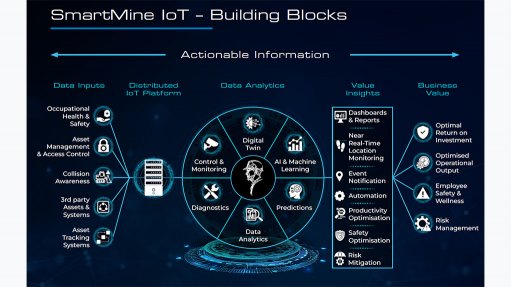
SmartMine IoT has been developed with the mining industry in mind, to provides our customers with powerful business intelligence and data modelling...
VISIT SHOWROOM
Goodwin Submersible Pumps Africa is sole distributors for Goodwin electrically driven, submersible, abrasion resistance slurry pumps.
VISIT SHOWROOM
Press Office
Announcements
What's On
Subscribe to improve your user experience...
Option 1 (equivalent of R125 a month):
Receive a weekly copy of Creamer Media's Engineering News & Mining Weekly magazine
(print copy for those in South Africa and e-magazine for those outside of South Africa)
Receive daily email newsletters
Access to full search results
Access archive of magazine back copies
Access to Projects in Progress
Access to ONE Research Report of your choice in PDF format
Option 2 (equivalent of R375 a month):
All benefits from Option 1
PLUS
Access to Creamer Media's Research Channel Africa for ALL Research Reports, in PDF format, on various industrial and mining sectors
including Electricity; Water; Energy Transition; Hydrogen; Roads, Rail and Ports; Coal; Gold; Platinum; Battery Metals; etc.
Already a subscriber?
Forgotten your password?
Receive weekly copy of Creamer Media's Engineering News & Mining Weekly magazine (print copy for those in South Africa and e-magazine for those outside of South Africa)
➕
Recieve daily email newsletters
➕
Access to full search results
➕
Access archive of magazine back copies
➕
Access to Projects in Progress
➕
Access to ONE Research Report of your choice in PDF format
RESEARCH CHANNEL AFRICA
R4500 (equivalent of R375 a month)
SUBSCRIBEAll benefits from Option 1
➕
Access to Creamer Media's Research Channel Africa for ALL Research Reports on various industrial and mining sectors, in PDF format, including on:
Electricity
➕
Water
➕
Energy Transition
➕
Hydrogen
➕
Roads, Rail and Ports
➕
Coal
➕
Gold
➕
Platinum
➕
Battery Metals
➕
etc.
Receive all benefits from Option 1 or Option 2 delivered to numerous people at your company
➕
Multiple User names and Passwords for simultaneous log-ins
➕
Intranet integration access to all in your organisation